Showing posts with label Hugo. Show all posts

14 February 2012

Blood Red Road by Moira Young


Photobucket

Saba has spent her whole life in Silverlake, a dried-up wasteland ravaged by constant sandstorms. The Wrecker civilization has long been destroyed, leaving only landfills for Saba and her family to scavenge from. That's fine by her, as long as her beloved twin brother Lugh is around. But when a monster sandstorm arrives, along with four cloaked horsemen, Saba's world is shattered. Lugh is captured, and Saba embarks on an epic quest to get him back. Suddenly thrown into the lawless, ugly reality of the world outside of desolate Silverlake, Saba is lost without Lugh to guide her. So perhaps the most surprising thing of all is what Saba learns about herself: she's a fierce fighter, an unbeatable survivor, and a cunning opponent. And she has the power to take down a corrupt society from the inside. Teamed up with a handsome daredevil named Jack and a gang of girl revolutionaries called the Free Hawks, Saba stages a showdown that will change the course of her own civilization. Blood Red Road has a searing pace, a poetically minimal writing style, violent action, and an epic love story. Moira Young is one of the most promising and startling new voices in teen fiction.
This book was hard to get into at first. I’m not sure where an Australian writer living in England learned an Ozark accent, but she had it down pretty well. That was really what was so harsh about this book: the voice of the narrator, Saba, is written in accent as if she was speaking to you. There are no quotation marks, only ‘But no I said.’ Add in the grammatical idiosyncrasies and a liberal dose of misspelled words and the result is a book that’s very difficult to get into since it’s not the way we’re used to reading books. As you read, though, the strangeness of the narrative voice forms a strong basis for the character and development of Saba. It turns from a strange way of writing to an quirk of the lead, something that shows where she came from and how much she has overcome to get to where she is. After I got over the narrative voice and started to appreciate it I found a really interesting story. Saba is harsh, uneducated, mean and unfair to her younger sister, and downright rude to most people. Somehow, though, we grow to love her anyway. I love how the narrator gives her a pet crow, Nero, from the beginning of the book. He is so loveable and smart that the reader can’t help but like Saba for his sake. Her quest to rescue her brother in the harsh, post-apocalyptic world drives the reader to look towards Lugh as well and forgive Saba of any small mistakes along the way. After all, she’s got bigger things to worry about than offending a crazy man on a boat. As Saba fights in gladiatorial battles I am still somehow rooting for her. After I met Jack I started rooting for him, too. The Free Hawks also get two thumbs up. I love a good tale of smart warrior women. In fact, I think the only thing I didn’t like was Saba’s treatment of Emmi. I loved seeing Emmi grow as a character, and even though Saba tried to deny it and hold her down as much as possible Emmi keeps rising to the occasion and showing that she’s got just as much grit as Saba does. There was also the problem with the Pinches. They didn’t seem incredibly realistic, and once you’ve reached the end of the books a lot of their actions seem insensible and illogical, making them seem more like plot devices than real characters. However, once I got past the language that is my only real complaint, which means this is an excellent story with no major drawbacks, a few different but equal examples of strong females, and an excellent romance story. I highly recommend it to everyone who can get past the writing style.

13 February 2012

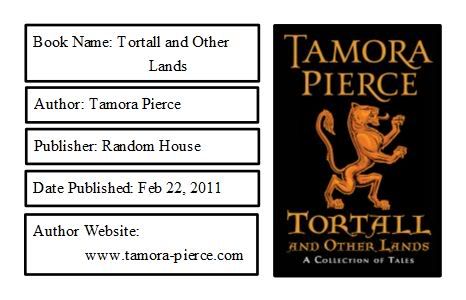
Tortall and Other Lands by Tamora Pierce


Photobucket

Collected here for the first time are all of the tales from the land of Tortall, featuring both previously unknown characters as well as old friends. Filling some gaps of time and interest, these stories, some of which have been published before, will lead Tammy's fans, and new readers into one of the most intricately constructed worlds of modern fantasy.
This anthology of short stories by my most favorite author ever, Tamora Pierce, came out early in 2011. With the Hugo awards coming up I wanted to be sure and review it because I will be nominating one of the stories for an award and I think other people should consider the stories when making their nomination choices.

Student of Ostriches: To be honest this story wasn’t one of my favorites, but I think that is because it is a reprinting of a story included in the Young Warriors anthology so I have had a few years to read and absorb it. I like the idea of following a female trying to become a Shang warrior, though, and it gives me hope that some day Pierce will write a set of books based on a girl (or even a boy) training to become Shang.

Elder Brother: This is the most intriguing story in the book. When Numair turns the rogue sorcerer Tristan into a tree in Wolf-Speaker he said that the rebound of the spell was that somewhere a tree turned into a man. Qiomis that tree. This story is the sad, funny, emotional tale of his first days learning to live not as a tree but as a man. It also introduces the harsh muslim-like culture that will feature in Hidden Girl.

The Hidden Girl: A story of a girl traveling with her preacher father and her attempts to educate women in religion just like her father educates her, and to take his place after he dies. This is a very interesting story to compare with current events in the Middle East and the efforts of women there.

Nawat: This is the story of Nawat Crow, the bird who took human shape for the love of a girl, and a story about that girl. Nawat and Aly have gotten married, you see, and Aly is about to have children. Told with Nawat’s voice, the story illustrates how difficult it was for the crows-turned-human to integrate their crow society into human society and how their animal instincts still cause them to do animal things like Nawat’s nesting and pestering of Aly before she gives birth. After the children are born Nawat is faced with a horrible choice, and the result is heart-rending no matter how you look at it. I will be nominating this story for a Hugo.

The Dragon's Tale: This was one of my favorite stories in the book. It is hard to remember that Kitten, Daine’s baby dragon companion, is a sentient being that just cannot communicate vocally yet. This story took Kit’s voice, which Pierce crafted as delightfully shrewd and yet playful, just the personality a baby dragon should have. I loved watching Kit work out how to accomplish her task, and although the end ing was a little deus-ex-machina it left me smiling.

Lost: This is the story of a girl with a gift for math. I liked how Pierce used the Tusiane society to parallel some of the things that girls face nowadays when they decide to put serious study into the maths and sciences. The introduction of new Darkings is also a delight as always.

Time of Proving: This story shows a great logic fallacy that I’ve always found funny: why does a rampaging dragon want virgin sacrifices anyway? In a funny story about a cloth merchant Pierce explores this common fairy tale trope with a fun new twist.

Plain Magic: I loved the premise of this story: who in the world thought that dragons needed a virgin sacrifice, and how stupid is that? Tonya is a great girl, and in the tradition of Pierce’s female leads she knows what she wants and figures out how to get things out of the way so she can have it. The old peddler, Lindri, also had me smiling with her practical manner and her kind demeanor.

Mimic: I thought this was one of the few so-so stories in the book. Perhaps that is because I didn’t really have a clear indication of where the book was set. It seemed to be in Tortall, but the dragons didn’t work in the same way, which confused me the whole way through the story (I had almost convinced myself that Mimic was a basilisk). It didn’t end badly, but my confusion left me feeling less than favorably about it.

Huntress: I downright disliked this story. The premise was nice: a scholarship teen tries to fit in with her rich private school classmates and is saved from bullies by the goddess her family worships. The way it worked, though, with kids killing homeless people and the goddess killing them in turn, seemed really unnecessary. It was too violent for my liking.

Testing: I’ve met Tamora Pierce. She is very short, very soft-spoken, and yet has very strong opinions and looks like she can be tough-as-nails when she needs to be. She reminds me very much of my grandmother who was also short, soft-spoken, and yet willing to wrestle a 3’ snapping turtle when necessary (yes, there’s video). This made the story Testing a lot more interesting to me. I could imagine the reactions to the mischiefs of the girls and see the twinkle in Pierce’s eye as she got them to come around. In all this book was great. I love seeing Pierce’s craft applied to shorter snippets of work. I also really liked getting some stories in a male voice, something I think Pierce does well but has been scarce in her book series. As I said above I was absolutely delighted with Nawat and I think it is one of the best stories to come out this year. I suggest this book to anyone who is a fan of Pierce’s work or to someone who has heard of her and wants to taste her writing style.

05 April 2011

A Young Adult Hugo Award?

I know I'm resurrecting a months-old topic, but I'd like to post my view on a pervasive argument against a YA Hugo that I've seen. It has a few permutations: would a YA Hugo attract readers to other Hugo nominees that aren't YA? Would the adult Hugo voters nominate and award stuff that kids and teens want to read? Would a YA Hugo attract younger people to WorldCon? I think this is really all part of the same question: would implementing this category actually get younger people to pay positive attention to us?

My answer is a limited yes. I do think it would help younger people to pay more attention to the Hugos and to WorldCon. Why limited? Because of course it's not going to work on every YA reader who's bought a YA novel in the last year. Nor should it. We don't want all the readers who ever read YA fiction. We want the ones who like science fiction and fantasy. The ones with inquisitive minds who like the imaginative elements of the escapist fiction we find valuable. We want the ones who will grow up to read (and maybe write) novels that will resonate with the Hugo voters in other categories as well as YA book nominations. Yes, I know this eliminates most of the "Twilight-only" and trendy paranormal romance crowd who crave romance over the spec-fic packaging it's in (not that all paranormal romance fans are like this, but I feel that the trending ones have more of a tendency to this). I think that's an ok result. Romance books have their own awards. And, after all, while we would like *more* people, we don't want a singular fan base overwhelming the convention or the voting or changing the tone and atmosphere of the convention. But I do think that in every genre, including the paranormal romance one, there are books worth reading and awarding, and we shouldn't throw all the genre out because of our opinion on one or two popular examples.

As to the related question: would a YA Hugo get more kids to read books? I'll have to answer honestly: probably not. I do think, however, that it will appeal to kids like us. Thinking back to Jr. High and High School, though, my parents never agonized over getting me to read more. In fact, I was specifically told to read less (because SOME people think math class is inappropriate for reading :( Can you imagine!?!). My problem was always finding more stuff to read that was of the type I wanted. My choices in a pre-internet Kansas school and library system were incredibly limited, and even finding names of books to order on ILL was a hard thing. While I think the internet makes this easier, I would still think that a YA Hugo would assist in this matter. Knowing the names of five books a year that are guaranteed to be the type of fiction I liked would have made me feel incredibly happy because I wouldn't have felt so alone in liking the "weird stuff" (as my parents, peers, and librarians made me feel when I asked for sci-fi and fantasy). If it also encouraged librarians in smaller public and school libraries in the middle of Kansas to stock more sci-fi and fantasy it would be an incredible boon. Even if it is adults choosing books for children, it's also increasing the choices available to those children who like the stuff we like. I think that giving kids access to Sci-Fi at a young age can only be a good thing. Giving them access to varied kinds of GOOD Sci-Fi would be even better. As someone who read Battlefield Earth five summers in a row because it was the only Sci-Fi book on the shelf in the public library I certainly would have appreciated it. I think that if a Young Adult Hugo makes a Young Adult librarian pause and go "maybe I should get the Hugo winner instead of another copy of this victorian classic" then we have done what the Hugos should do: increase interest in good Science Fiction.

To the final question, "can adults pick out good YA books in an award system like the Hugos?" I say yes as well. Perhaps it is because I still read YA fiction to a great extent, but I don't think it is a reach for adults to judge YA fiction and find the stuff that is good. Good books resonate. Even as an adult they have the ability to make you remember how it felt to be a teenager going through similar difficult times. I also think it is something that would reach down to the readers, especially the readers who will grow up to be Hugo voters. Yes, we may not identify with the girl who lives to fall in love with a sparkly vampire, but I think that a well-written book about a vampire (sparkles or no) would appeal to adults as well as children. And I believe that the YA books that would appeal to the Hugo voters would be the ones that appeal to children and teens that are "one of us". The people we want to attract to the Hugos and to WorldCons in the future. The ones who can be running WorldCon in 2035 because they were attracted to the scene young. I would also argue that reading habits don't change that much over the years. Think back to what you read as a teenager. If you're a hard-core sci-fi fan I bet it was sci-fi. If you lean more towards fantasy I bet it was fantasy. However, I'd bet it wasn't Harlequin romances that developed your love of science fiction. Sure, themes you identify with the most may have changed from "experiences of a teenage boy" to "experiences of a middle-aged man", but I bet those themes were wrapped up in approximately the same package. If we're looking to attract readers who will want to enjoy the media in all the Hugo award categories then it makes sense to award the stuff that the adults like. In doing so we're self-selecting, and the readers who like what we select will understand that the Hugos are the books that mean something to them, so the people that vote on them might be people who will understand them and their loves.

31 January 2011

For Your Consideration - 2011 Hugo Nominees

I know there's a lot of controversy going on right now in the WorldCon community over the proposal of a new award category for Children's and YA novels. One of the arguments (both for and against, depending on how you view it) is the question of whether or not there are Children's and YA books worth nominating. In that vein, here is my short-list of Children's and Young Adult books published in 2010 that are worthy of a Hugo:

BEST NOVEL:

Mockingjay by Suzanne Collins


Mockingjay is a wonderful, provocative finisher to a series that has met critical and public acclaim. It debuted at #1 on the USA Today and New York Times Bestseller lists. Its publication netted Collins inclusion on Time Magazine's Most Influential People of 2010. The rights to Hunger Games have been optioned for a movie that is in development. All of this on top of a beautiful dystopia that defies all stereotypes and returns an honest, gritty look at the result of war and rebellion, even ones that are against unjust tyrants.


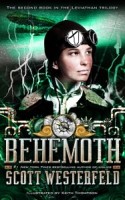
Behemoth by Scott Westerfeld


Westerfeld has created a beautiful world that is strikingly different from our own based on only a few premises: what if Darwin continued his studies and discovered DNA and how to manipulate it, and what if countries either adopted that or utilized machine technology in protest? The result is a wonderful World War I alterna-history about two children that is entertaining and displays a great depth at a level that all ages can appreciate.


BEST NOVELLA:

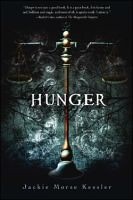
Hunger by Jackie Morse Kessler


((Note: at 44,300 words this book falls over the strict word limit but is within the 5000 words or 20% rule to be placed in this category [Constitution 3.2.9]))

I think this was the book from 2010 that impacted me the most. Lisabeth's characterization is amazingly good. I really felt that I could understand and identify with Lisabeth and her attraction to anorexia. The utilization of the four horsemen as a catalyst for both giving Lisabeth everything she wants and making her realize she doesn't really want any of it is very insightful, and the way Kessler pulls it off is truly gifted. If you only read one thing off this list I really hope it is Hunger.


BEST NOVELETTE:

“The Care and Feeding of Your Baby Killer Unicorn" in Zombies vs. Unicorns by Diana Peterfreund

This story is about a girl who finds a unicorn and, instead of killing it, tries to raise it as a pet. She discovers that with the unicorn around her "demon powers", which her parents call a curse, are actually heightened and useful. A great short about a girl discovering to value herself and her talents and follow her heart instead of her parents' debasing teachings).


BEST SHORT STORY:

"Bougainvillea" in Zombies vs. Unicorns by Carrie Ryan

This is a story about a girl whose father rules Curacao after the zombie uprising, keeping zombies off the island and everyone safe. Not everyone appreciates his ruthless rules, though, and through the conflict of obeying or rebelling Isa discovers her own power and autonomy and delivers an amazing twist ending.


“The Aarne-Thompson Classification Revue” in Full Moon City by Holly Black

This was a truly gifted story. I love the parallels of transformation: girl into werewolf, girl into actress, actress into role. The thought that it took playing someone else to make Nadia comfortable with who she really is is an great twist. Lots of characterization and plot packed into such a short package.


BEST PROFESSIONAL ARTIST:

Keith Thompson

His work on Leviathan and Behemoth is truly awesome, and his steampunk and cyberpunk art will captivate you.


THE JOHN W. CAMPBELL AWARD FOR BEST NEW WRITER (NOT A HUGO AWARD):

Malinda Lo (2nd year of eligibility)

Her novel, Ash, was published in 2009 and is thus not eligible, but I certainly think its impact as an Andre Norton Nominee along with Scalzi's Zoe's Tale demonstrate that Lo is going to be an author to watch in the future.


Diana Peterfreund (2nd year of eligibility)

Diana's Unicorn series (Rampant and Ascendant) are truly excellent fantasy, tackling not only the ancient trope of a innocent girl as bait twisted in a Buffy the Vampire Slayer type way, but put it all in a shell of believable characterization that makes you love Astrid and care for her throughout all the stories. I believe Peterfreund is going to give us more truly special works in the future.